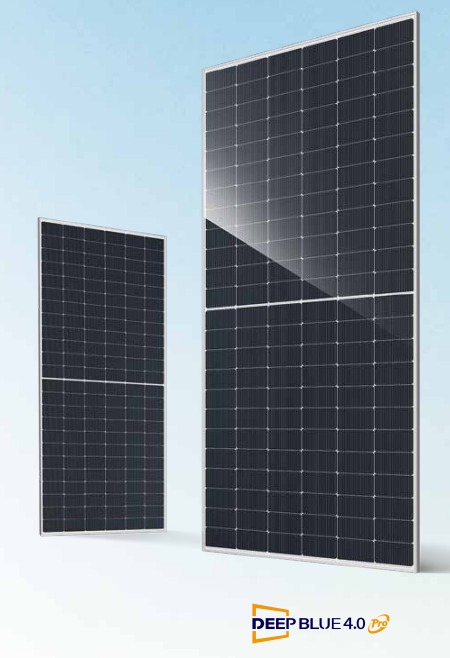
JA Solar • deepblue 4.0 pro jam72s42-625-650lr (australia...
JAM72S42-630/LR630W
Key Features
- Smaller LCOE
- Lower operating temperature
- Better mechanical loading tolerance
- Optimized temperature coefficient
- Reduced shading effect
- Lower resistance
JA Solar JAM72S42-630/LR Panels: What Your System Looks Like
Based on a standard 10kW residential installation
Electrical Data (STC)
Mechanical Data
Temperature Ratings
Similar Products
Will These Panels Fit Your Roof?
Don’t guess your solar potential. Our Roof Layout Designer uses the exact dimensions of the JA Solar JAM72S42-630/LR (630W modules) to map out your system. Visually plan your array to see exactly how many modules your roof can support based on its specific footprint.
Ideal Use Case
The JA Solar JAM72S42-630/LR is designed for specific solar energy applications. This panel is an excellent choice if you:
Don’t guess your solar setup — calculate it first!
Take our Solar Quiz to get a personalized recommendation for panels, inverter, battery capacity, and system size — before you spend money on the wrong setup.
Product FAQ
How many JA Solar JAM72S42-630/LR panels do I need for my home?
The number of panels depends on your energy consumption and roof area. At 630W per panel, a typical 10kW residential system requires about 16 modules. Use our Solar Roof Calculator to get a precise layout based on your actual roof dimensions.
What is the efficiency of JA Solar JAM72S42-630/LR?
This panel has an efficiency of 22.5%, using N-type cell technology. Higher efficiency means more electricity per square meter, which is especially valuable when roof space is limited.
What are the dimensions of the JA Solar JAM72S42-630/LR?
The module dimensions are 2465mm × 1134mm × 30mm. Always account for these measurements plus fire setbacks and mounting clearances when planning your solar layout.
Is JA Solar JAM72S42-630/LR compatible with standard inverters?
Yes, these panels work with most string and hybrid inverters. However, you must check the Voc (Open Circuit Voltage) and Imp (Current at Max Power) against your inverter's MPPT specs.
