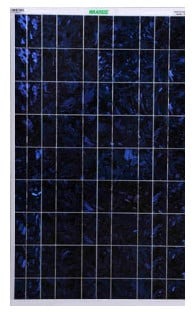
Waaree Energies • arun series ws 100-235
WS-220220W
Key Features
- Ideal for On/Off-Grid applications
- Rural Electrication
- Off-grid solar system
- Mobile solar system
- Solar street light & lantern applications
Electrical Data (STC)
Mechanical Data
Temperature Ratings
Similar Products
Ideal Use Case
The Waaree Energies WS-220 is designed for specific solar energy applications. This panel is an excellent choice if you:
Don’t guess your solar setup — calculate it first!
Take our Solar Quiz to get a personalized recommendation for panels, inverter, battery capacity, and system size — before you spend money on the wrong setup.
Product FAQ
How many Waaree Energies WS-220 panels do I need for my home?
The number of panels depends on your energy consumption and roof area. At 220W per panel, a typical 10kW residential system requires about 46 modules. Use our Solar Roof Calculator to get a precise layout based on your actual roof dimensions.
What is the efficiency of Waaree Energies WS-220?
This panel has an efficiency of 14.91%, using Bifacial, TOPCon, N-type cell technology. Higher efficiency means more electricity per square meter, which is especially valuable when roof space is limited.
Can I get more power from the bifacial Waaree Energies WS-220?
Yes. Since this is a Bifacial module, it can capture sunlight from both sides. Depending on the reflectivity (albedo) of your roof surface, you can see a gain of 5% to 25% in total energy yield.
What are the dimensions of the Waaree Energies WS-220?
The module dimensions are 0mm × 0mm × 0mm. Always account for these measurements plus fire setbacks and mounting clearances when planning your solar layout.
Is Waaree Energies WS-220 compatible with standard inverters?
Yes, these panels work with most string and hybrid inverters. However, you must check the Voc (Open Circuit Voltage) and Imp (Current at Max Power) against your inverter's MPPT specs.
What warranty does the Waaree Energies WS-220 come with?
This panel includes a 5-year product warranty from Waaree Energies. Solar panels typically degrade about 0.4–0.5% per year, meaning this module should retain over 87% of its original output after 30 years.
